
Commodity ETFs Europe: Gold, Oil & Agricultural Investments
European investors increasingly turn to commodity ETFs for portfolio diversification beyond traditional stocks and bonds. These vehicles offer exposure to precious metals, energy, and agricultural products. Crucially, they avoid the complexities of direct commodity ownership. Moreover, the European ETF market hit record highs of €2.74 trillion in 2025. Therefore, commodity ETFs now serve as essential tools for modern portfolio construction.
Understanding Commodity ETFs vs ETCs in Europe
European commodity investing follows strict UCITS (Undertakings for Collective Investment in Transferable Securities) rules. These rules create important distinctions between ETFs and ETCs. Notably, UCITS requires minimum diversification standards. By contrast, single-commodity exposure through traditional ETF structures stays off-limits. Consequently, most European commodity products take the form of Exchange-Traded Commodities (ETCs) rather than ETFs.
Comparing UCITS funds? Take the decision workbook with you.
This analysis sits within our thematic ETF guide.
The ETF Comparison Workbook: TER, domicile, withholding and overlap checks in one printable spreadsheet.
Key differences include:
- UCITS ETFs: Must hold diversified portfolios, typically available for broad commodity baskets
- ETCs: Structured as debt securities, allowing single-commodity exposure like gold or oil
- Investor Protection: UCITS products offer stronger regulatory safeguards and asset segregation
Gold ETFs and ETCs: The European Favorite
Gold remains the star performer among commodity investments. EUR-hedged gold ETFs delivered a remarkable 37.2% return over the past year. In addition, European investors can choose from 22 different gold ETFs and ETCs. These range from physically-backed products to currency-hedged options.
Use the FX-hedge impact tool to see if the hedge pays off at your expected currency volatility.
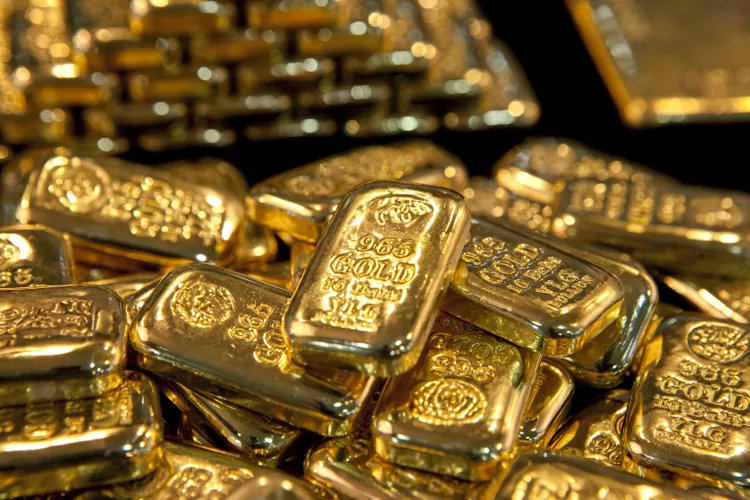
Close-up of gold bullion bars marked with purity and weight, representing gold as a valuable commodity for investment – investopedia
Top performing gold products include:
- iShares Physical Gold EUR Hedged ETC: 37.57% annual return
- Xtrackers IE Physical Gold EUR Hedged ETC: 37.19% annual return
- Invesco Physical Gold EUR Hedged ETC: 37.14% annual return
Cost considerations differ sharply across providers. For example, the cheapest options include EUWAX Gold and boerse.de Gold ETC at 0.00% annual fees. By contrast, premium products charge up to 0.59% annually. Notably, the largest gold ETC, iShares Physical Gold ETC, manages €20.2 billion in assets.
Currency Hedging Benefits
EUR-hedged gold ETCs have clearly outperformed their unhedged counterparts. Additionally, they shield European investors from dollar fluctuations. This currency protection adds 8-10 percentage points to returns. In short, hedged products look particularly attractive for European portfolios.
Oil ETFs: Navigating Energy Market Volatility
Oil ETFs face unique challenges in European markets thanks to UCITS restrictions. Most oil exposure comes through ETCs that track either Brent crude or West Texas Intermediate (WTI) futures contracts. However, recent performance has disappointed. Oil ETCs delivered -18.9% returns over the past year.
Leading oil ETCs include:
- WisdomTree WTI Crude Oil: €472 million in assets, 0.49% TER
- WisdomTree Brent Crude Oil: €234 million in assets, 0.49% TER
- BNPP ICE Brent Oil ETC: €13 million in assets, 0.90% TER
Structural considerations matter significantly for oil ETCs. These products use swap-based replication, which tracks futures contracts rather than physical oil. Consequently, contango and backwardation effects can shape returns beyond spot price movements.
Oil Sector ETFs Alternative
European oil sector ETFs deliver indirect commodity exposure through energy companies. For example, the iShares STOXX Europe 600 Oil & Gas UCITS ETF covers European energy giants like Shell, TotalEnergies, and BP. Moreover, this approach provides dividend income and operational leverage to oil prices while keeping UCITS compliance. Additionally, investors gain from holding diversification, since these ETFs typically span several sectors within the energy landscape. Furthermore, platforms like eToro let users explore the top features of eToro for ETFs. Notably, that includes social trading capabilities and real-time analytics to sharpen investment strategies. In short, this mix of diversified exposure and innovative trading tools helps investors navigate the oil market more confidently.
Agricultural Commodity ETFs: Feeding Portfolio Diversification
Agricultural commodity exposure stays limited in European markets due to regulatory constraints. The WisdomTree Agriculture EUR Daily Hedged ETC represents the main option for direct agricultural commodity exposure. However, it manages only €1 million in assets.

Close-up of soybeans, corn, wheat, and sunflower seeds representing key agricultural commodities for investment – foodbusinessnews
Agricultural investment alternatives include:
- iShares Agribusiness UCITS ETF: €314 million in assets, 0.55% TER
- Direct agricultural commodity ETCs: Limited availability
- Broad commodity ETFs: Including agricultural components
The iShares Agribusiness UCITS ETF tracks companies in the agriculture business rather than commodity prices directly. For example, it covers fertilizer producers, equipment manufacturers, and agricultural processors. Although this offers operational leverage to agricultural markets, it also adds company-specific risks alongside commodity exposure.
Agricultural Market Dynamics
Agricultural commodity markets saw significant volatility in 2024. Cocoa rose 172% and coffee gained nearly 70%. However, supply chain disruptions and weather-related risks create substantial volatility in agricultural commodity investments.
Performance Comparison Across Commodity Categories
The performance gap between commodity categories grew especially wide in 2025. In particular, precious metals significantly outperformed other sectors.
1-year performance comparison of different commodity ETF categories available to European investors
Broad commodity ETFs offer diversified exposure across multiple commodity sectors. Therefore, they deliver portfolio-level diversification benefits. Typically, these products track established commodity indices and maintain UCITS compliance through diversification.
Leading broad commodity ETFs include:
- iShares Diversified Commodity Swap UCITS ETF: €1.235 billion in assets, 0.19% TER
- UBS CMCI Composite SF UCITS ETF: €847 million in assets
- WisdomTree Broad Commodities UCITS ETF: 0.19% TER
Tax Implications for European Investors
Tax treatment varies significantly across European jurisdictions. Consequently, commodity ETF investors face important considerations. In general, UCITS ETFs receive more favorable tax treatment than ETCs in many European countries. Moreover, this gap can shape overall returns depending on each investor’s specific tax situation. Importantly, anyone wanting to maximize investment efficiency must grasp these nuances. Additionally, many investors use platforms like xtb for european investors to navigate the tax complexities of these instruments.
Key tax considerations include:
- Capital gains treatment: Varies by domicile and holding period
- Dividend taxation: Relevant for equity-based commodity ETFs
- Withholding tax: Impact depends on ETF domicile and structure
German investors enjoy favorable tax treatment on UCITS ETFs. By contrast, French investors pay Financial Transaction Tax on certain equity ETFs. Therefore, professional tax advice stays essential for optimizing commodity ETF taxation.
Trading Costs and Platform Access
Trading costs for commodity ETFs differ widely across European brokers. Notably, commission-free trading has become increasingly common. For example, platforms like DEGIRO offer free trades on selected ETFs monthly.
| Broker | ETF Fees | Minimum Deposit | Number of ETFs |
|---|---|---|---|
| eToro | €0 (other fees apply) | €50 | 300+ |
| Interactive Brokers | 0.05% of trade value | €0 | 13,000+ |
| DEGIRO | €0 + €1 handling fee | €1 | 200+ |
| XTB | €0 | €1 | 100+ |
Bid-ask spreads typically range from 0.02% to 0.25% for liquid commodity ETFs. However, less liquid products can show wider spreads during volatile market conditions.
Risk Management and Portfolio Allocation
Commodity ETF allocation demands careful thought about volatility characteristics and correlation patterns. Typically, financial advisors recommend a 3-5% portfolio allocation to commodities for diversification benefits.
Risk factors include:
- Commodity price volatility: Particularly high for energy and agricultural products
- Currency risk: Significant for unhedged USD-denominated commodities
- Contango effects: Impact futures-based commodity ETCs
- Regulatory changes: Potential impact on product availability
Correlation benefits stay attractive during equity market stress. Crucially, commodities often deliver negative correlation to stocks during crisis periods.
Regulatory Landscape and MiFID II Impact
MiFID II regulations brought significant changes to European commodity derivative markets. For example, they introduced position limits and enhanced reporting requirements. Although these changes primarily target institutional investors, they also shape product availability and pricing structures.
Key regulatory impacts include:
- Position limit regimes: Affecting large institutional investors
- Enhanced transparency: Improving market efficiency
- Increased compliance costs: Potentially affecting product fees
UCITS framework updates keep evolving. Notably, ESG considerations and sustainability reporting grow ever more important for commodity ETF providers.
Future Outlook and Market Trends
Commodity ETF markets in Europe keep expanding. In practice, H1 2025 brought €7.1 billion in inflows after the previous year’s outflows. Moreover, active commodity ETFs are emerging as the next growth area. Therefore, they offer dynamic allocation strategies and enhanced risk management.
Emerging trends include:
- ESG-focused commodity ETFs: Incorporating sustainability criteria
- Active commodity strategies: Professional management for complex markets
- Cryptocurrency commodity hybrids: Exploring digital asset integration
- Enhanced index methodologies: Improving long-term performance
European regulatory harmonization keeps progressing. Consequently, it could expand cross-border product availability and cut complexity for international investors.
Conclusion
Commodity ETFs and ETCs give European investors essential tools for portfolio diversification and inflation protection. Although gold ETFs have delivered exceptional performance, oil and agricultural exposures offer different risk-return profiles. Therefore, they suit various investment objectives.
Success requires understanding the regulatory landscape, cost structures, and risk characteristics of different commodity products. Moreover, professional advice and careful allocation stay crucial. In short, they help maximize diversification benefits while managing the inherent volatility of commodity investments.
European commodity ETF markets keep evolving. Notably, increasing product variety and improving access make these investments more attractive for both institutional and retail investors. In addition, the €2.74 trillion European ETF market delivers ample liquidity and competitive pricing for commodity exposure across precious metals, energy, and agricultural sectors.
The structural rule that shapes this entire shelf
Almost nothing in European commodities is legally a fund, and that single fact explains most of what confuses buyers. UCITS regulation requires diversification — the 5/10/40 framework caps how much of a fund may sit with one issuer — and a product holding one metal in one vault is, by construction, entirely concentrated. It cannot be a UCITS fund. So the industry issues it as a debt security instead: an exchange-traded commodity, a note secured on allocated bars held with a custodian, listed and traded exactly like an ETF.
Three consequences follow, and they are the things worth checking before any purchase. Read the collateral, not the tracking error — you hold a secured note, so the custodian, the audit regime and whether the metal is allocated and serial-numbered are what matter. The protection layer is different: UCITS funds carry ring-fenced assets and a depositary regime, ETCs carry a security interest over specific bars. Both are robust with a major issuer; they are not the same thing. Tax can differ by country precisely because the wrapper is legally debt rather than a fund — the German treatment of physically deliverable metal products is the best-known divergence. The ETF-versus-ETC explainer works through the structure in full.
The exception worth knowing: a broad commodity product holding many futures across energy, metals and agriculture can be a UCITS fund, because it is diversified by design. That is why the diversified commodity swap fund is a fund while a gold product is not.
Why futures-based commodity funds do not track the spot price
The most common disappointment in this category comes from an assumption nobody stated out loud: that a commodity fund tracks the price you see quoted on the news. It does not, and cannot. Physical storage of oil or wheat is impractical at fund scale, so broad commodity products hold futures contracts and roll them forward as they expire.
That roll is where the return diverges. When longer-dated contracts cost more than near-dated ones — contango — each roll sells low and buys high, bleeding return even if spot prices never move. When the curve inverts — backwardation — the roll adds return. Over the 2010s, persistent contango in energy markets meant investors could be right about the oil price and still lose money for years.
Two practical implications. First, judge a broad commodity fund by its total return including roll, never against a spot chart. Second, the index methodology matters more than the fee: funds using optimised or enhanced roll rules deliberately spread contracts across the curve to reduce the drag, and that design choice will out-earn a few basis points of TER many times over.
How much, and which job it is doing
Commodities are the one asset class where sizing discipline matters more than selection, because the long-run real return on a diversified commodity basket has been close to zero before costs. You are not buying growth. You are buying a return stream that behaves differently from equities in an inflation shock.
The rules this site applies: gold as a portfolio diversifier at 5–10%, held permanently and rebalanced rather than traded; broad commodities at 0–5% as an inflation hedge for portfolios that specifically want one; single industrial metals at 1–3%, summed with every other satellite under one ceiling. Anyone holding gold, a broad basket, miners and a single metal should add those weights together before deciding they are diversified — they are frequently expressing the same view four times. The gold guide and the precious-metals ETC guide cover the sleeve in detail, and gold against the S&P 500 settles the question of what it has actually delivered.
Sources and further reading
- justETF — European UCITS ETF screener
- Morningstar UK ETF rankings
- ESMA — European Securities and Markets Authority
- Bogleheads wiki — EU investing
- ETF.com industry data
Before you open any account
grab the free 12-page Starter Kit: the 7-filter fund shortcut, the 3-question broker safety matrix, and the 7 mistakes that cost beginners the most.
Frequently asked questions
Are commodity ETFs actually ETFs?
Broad futures-based commodity products can be UCITS funds because they are diversified. Single-commodity products cannot — they are issued as exchange-traded commodities, secured notes backed by the physical metal.
Why doesn’t my commodity fund track the price I see quoted?
Because it holds futures and rolls them. In contango the roll sells low and buys high, draining return even when spot prices are flat; in backwardation it adds return.
How much should I hold?
Gold 5–10% as a permanent diversifier, broad commodities 0–5% as an inflation hedge, single industrial metals 1–3% — all summed under one satellite ceiling.
Do commodities produce income?
No. There is no coupon and no dividend; the entire return is price movement minus costs, which is why the long-run real return on a diversified basket has been close to zero before fees.
Is gold the same trade as the other metals?
No. Gold is monetary, driven by real rates and central-bank demand. Platinum and palladium are industrial metals whose demand is dominated by autocatalysts, and silver is roughly half industrial.
What should I check before buying an ETC?
Physical backing with allocated, serial-numbered bars, a named custodian, published bar lists and independent audits — and your own country’s tax treatment, which can differ because the wrapper is legally debt.
Cited sources: justETF fund data, LBMA good-delivery standards, and The gold ETF guide. Verify current fund figures before investing. Educational content, not financial advice.
European UCITS/ETF investor with 11+ years building a global dividend and index portfolio, and founder of Financial Expert Class. I write every guide here from first-hand experience investing across EU brokers and tax regimes — not theory. More about me →