
You do not have to sell. Trade Republic supports an in-specie securities transfer (Depotübertrag) to another broker, says it charges no fee for it, and aims to finish within three weeks of receiving your transfer order (as of October 2026). In most cases you fill in the new broker’s transfer form, naming Trade Republic as the delivering bank. Because the shares move between your own accounts rather than to another person, German law does not treat it as a disposal, so no gain is realised. Only whole shares can move; fractions have to be sold.
If you have decided Trade Republic is no longer the right home for your ETFs, the good news is that you almost certainly do not need to sell anything to leave. Trade Republic supports a securities transfer, which German investors know as a Depotübertrag, and that lets you move your actual shares to another broker while keeping them invested the whole time.
This matters more than most people realise. Selling a portfolio just to switch brokers can trigger a capital-gains tax bill that costs you far more than any transfer fee. An in-specie transfer avoids that entirely: the same ETF units land in your new account, your cost basis follows them, and nothing is realised for tax purposes. I have moved holdings between European brokers myself, and the mechanics are less intimidating than the jargon suggests.
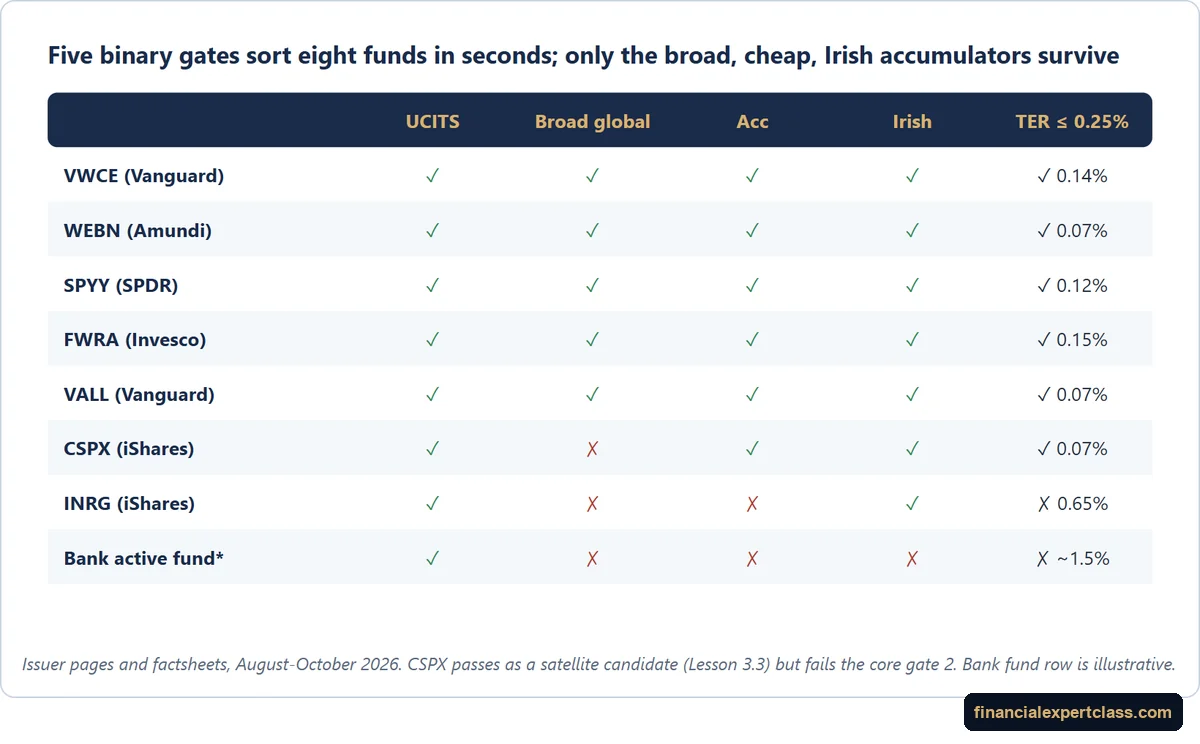
Broker sorted? The fund comes next. The 7 filters that shrink 3,000+ ETFs to a shortlist. Run any fund through seven checks in the right order, with worked examples on October 2026 data. The full lesson, free, no sign-up.
Read the free lesson →Below I walk through how the transfer works, how to start it, what it costs, where the fractional-share catch bites, and how to choose where your portfolio goes next.
What a Trade Republic transfer actually is
When you leave Trade Republic, you have two fundamentally different options. You can sell every position, withdraw the cash, and buy everything again at the new broker. Or you can transfer the securities themselves, in kind, without selling. That second route is the Depotübertrag, and for anyone sitting on gains it is almost always the right one.
How we test: broker verdicts on this site follow our published broker review methodology — real accounts, live orders and documented fee checks.
Ready to open an account? You can open a Trade Republic account directly.
The reason is tax, and it is in the statute rather than in custom. §43(1) sentence 4 EStG deems a transfer of securities held by a paying agent to be a disposal only where they move to another creditor — auf einen anderen Gläubiger. A move between your own depots has the same creditor at both ends, so it is not a disposal and it does not crystallise a taxable event. Your acquisition data travels with the shares. Trade Republic records the price and date you bought each lot, and it passes that information to the receiving broker so your future tax calculation stays correct. If instead you sell and rebuy, you realise every gain in one go and hand the taxman a bill you did not need to pay yet.
One important nuance, and the statute is specific about it. §43a(2) sentence 3 EStG obliges the delivering German paying agent to hand the acquisition data to the receiving German paying agent — that is why a Trade-Republic-to-Scalable move is automatic. Sentence 5 says that where the delivering institution sits in another EU or EEA state, you may prove the acquisition data only by a certificate from that institution, and sentence 6 says that in every other case proof is not admissible at all.
Sentence 7 is the one worth remembering: where the acquisition data is not proven, German withholding tax is charged on 30% of the gross sale proceeds rather than on your actual gain. That is the Ersatzbemessungsgrundlage, and on a long-held position that has doubled it can take far more tax than you owe. You get the excess back through your tax return, but only if you kept the evidence. So: it is still not a sale, and the practical instruction is to keep every Trade Republic statement showing the date and price of each lot. I cover the destination choice further down.
In-specie transfer versus sell and rebuy
Here is the trade-off in plain terms. The transfer column reflects Trade Republic’s help centre as of October 2026; check current terms with both brokers before you act.
| Feature | In-specie transfer (Depotübertrag) | Sell and rebuy |
|---|---|---|
| Taxable event | No — gains are not realised | Yes — every gain crystallises |
| Cost basis / tax lots | Carry over with the shares | Reset to the rebuy price |
| Time out of the market | None — you stay invested | Days to weeks of price risk |
| Fractional shares | Cannot transfer — only whole shares move | Handled automatically (all sold) |
| Typical timeline | Up to 3 weeks after Trade Republic receives the order | A few days once cash clears |
| Cost | No Trade Republic fee; third-party fees possible for some securities | Trading spreads plus a tax bill |
For a whole-portfolio move, the in-specie route wins on nearly every line that matters. The only time sell-and-rebuy makes sense is if your position is tiny, sitting on a loss you actively want to harvest, or held entirely in fractions that cannot move anyway.
Rates referenced here follow our 2026 ETF tax data, checked against official sources.
Do I start the transfer at Trade Republic or at the new broker?
In most cases, at the new broker. You fill in the receiving broker’s transfer form or digital transfer service, naming Trade Republic as the delivering bank, and the order then goes to Trade Republic to carry out. Trade Republic’s help centre says it emails you once it has received and processed your securities account transfer form.
The practical rule: the destination account must exist and be verified before anything can move, because the transfer order needs its details. If your new broker offers no transfer service, which is more common with brokers outside Germany, ask its support which form it accepts, and contact Trade Republic support in the app; Trade Republic’s own help article on closing an account also sends you to the in-app chat. Here is the sequence.
1. Open and verify the destination account first. You need the new account fully open and identity-verified before anything can arrive. Do not close Trade Republic yet.
2. Gather your holding details. For each position, note the ISIN, the exact quantity of whole shares, and ideally the acquisition date and price. Your Trade Republic statements have all of this.
3. Complete the incoming-transfer request at the new broker. This is usually a form (paper or digital) where you list Trade Republic as the delivering institution, quote your Trade Republic account details, and list each ISIN and quantity. Some brokers offer a guided in-app flow; others still want a signed form. Trade Republic’s published settlement instructions give its BIC as TRBKDEBBXXX, the code most forms ask for.
4. Deal with fractions separately. If you bought via Trade Republic savings plans, you almost certainly hold fractional units. Trade Republic states plainly that only whole assets can be transferred, so decide whether to sell just the fractional remainder before you start, or leave a whole-share transfer to go through and clean up the crumbs afterwards.
5. Submit and wait. Trade Republic says a transfer out should not take longer than three weeks after it receives the order, though delays can happen because several parties are involved, including the receiving custodian. Your shares stay invested and exposed to the market the entire time, which is exactly what you want.
6. Reconcile at the end. Once everything arrives, confirm the quantities match and that the acquisition data came across. Then, and only then, wind down anything left at Trade Republic.
If you want a fuller picture of what safety nets protect your shares while they are in flight, my explainer on what happens to your ETFs if a broker goes bankrupt is worth a read — segregated custody means a transfer-in-progress is still your property.
Trade Republic transfer details: BIC, transfer-out address and the app link
Three strings bring people to this page from search, so here is what each one is.
TRBKDEBBXXX is Trade Republic Bank GmbH’s BIC as listed in its own standard settlement instructions (the file online in October 2026 is dated June 2024). Most transfer forms ask for the delivering bank’s name and BIC, your Trade Republic securities account number, and each ISIN and quantity.
[email protected] appears in that same document as the contact for transfers out of Trade Republic, next to a separate transfer-in address. It sits in a bank-to-bank settlement sheet, so treat it as an operations contact for your new broker’s back office. As a customer, go through the app or Trade Republic support.
traderepublic://securities-account-transfer is an app deep link, not a web address. It only opens inside the Trade Republic app on a device where the app is installed, which is why pasting it into a browser sends you to a search engine instead. The FAQ below explains what to do if it does not open for you.
Fees, tax carry-over and the fractional-share catch
Trade Republic’s help article on outgoing transfers is explicit, as of October 2026: “Trade Republic will not charge you any fees for the transfer. In some cases, however, third-party fees may apply.” It adds that those third-party fees depend on factors such as the type of security and the foreign depositories involved. Be clear about the basis, though: this is Trade Republic’s own policy, not an EU rule, and no European directive caps what a broker may charge to let you leave. Check the help centre again on the day you start, and ask your new broker whether it charges anything to receive.
Moving brokers? Check your funds while you are at it.
- The European ETF Starter Kit — 12 pages: your first fund, a safe low-cost broker and the 7 costliest beginner mistakes
- + 2 bonus PDFs: Comparison Workbook and Dividend Starter Sheet
- + a free lesson from the €147 Masterclass
The fractional-share issue is the one that trips people up. Savings-plan investors accumulate odd fractions of an ETF, and Trade Republic’s own pages say that only whole assets provide voting rights and can be transferred. In practice that means selling the fractional portion — a small, usually low-tax disposal — while the whole-share block transfers cleanly. It is a minor annoyance, not a reason to abandon the in-specie route.
On tax, keep every confirmation. If both ends report to the German tax system, the process is largely automatic. If you are moving to a broker outside that system, you become responsible for evidencing your original purchase prices, so those Trade Republic statements are gold. For an overview of German withholding mechanics, the regulator BaFin is the authoritative starting point, though for your personal position a Steuerberater is worth the fee.
Choosing where your portfolio goes next
The destination decides how painless this is. Two directions make sense for most people leaving Trade Republic. If you want to stay in the German neobroker world with local tax reporting and savings plans, Scalable Capital is the natural comparison — I break down the differences in Scalable Capital versus Trade Republic. If instead you are leaving because you want more markets, multi-currency cash and rock-bottom FX, a global broker fits better.
Interactive Brokers as a destination
For investors who have outgrown a simple app, Interactive Brokers is the most common landing spot. It gives you access to global exchanges, genuine multi-currency accounts, very cheap currency conversion, and an account that survives international moves — useful if you might relocate. It is more complex than Trade Republic, and the interface is not as friendly, but for a serious long-term portfolio the trade-off usually pays off. I explain the reasoning in why Interactive Brokers stands out for European ETF investors. If you are weighing several options rather than committing, my European ETF broker hub lays them side by side.
Ready to open an account? You can open an Interactive Brokers account directly.
Before you move, it is also worth a sanity check that you are leaving for the right reasons rather than a bad news cycle. My take on whether Trade Republic is safe in 2026 covers the regulation and asset protection, so you can separate a genuine feature gap from a passing worry.
Moving to another country with a Trade Republic account
Some people leaving Trade Republic are not unhappy with it at all; they are moving abroad. Trade Republic’s help centre says it can only accept customers who are permanent residents of a country where it offers its product. As of October 2026 that list has 17 countries: Germany, Austria, France, Spain, Italy, the Netherlands, Belgium, Luxembourg, Finland, Ireland, Greece, Portugal, Estonia, Latvia, Lithuania, Slovenia and Slovakia.
If you are moving between two of those countries, ask Trade Republic support how your account and tax set-up will change before you go. If you are moving outside the list, for example to the UK, Switzerland or Canada, plan the transfer out while you still live in a supported country, and choose a destination broker that accepts residents of your new home. That is exactly the situation where a globally available broker earns its extra complexity.
Closing your Trade Republic account afterwards
Do not close anything until the transfer has landed and you have checked quantities and acquisition data at the new broker. Then follow Trade Republic’s own account-closure steps, as published in October 2026:
- Empty the account first: transfer out your remaining securities and move out your cash.
- In the mobile app, tap your avatar at the top of the Wealth or Cash tab, scroll down to Help, tap Profile and then Close Account. The option is only in the mobile version.
- Read the closure conditions, continue to the chat and confirm the closure there.
The closure is then scheduled for the last day of the following month. Before that date, download every statement and tax report you may need later. Acquisition data is exactly what you will want if a tax question comes up years from now.
What I would do
If I were leaving Trade Republic with a portfolio holding gains, I would transfer in specie every time and never sell first. I would open the destination account, list my whole-share positions by ISIN, sell only the unavoidable fractions, and let the Depotübertrag run, which Trade Republic says should take no more than three weeks after it receives the order, while staying fully invested. For a European investor who mostly buys one or two all-world ETFs and wants to keep local tax reporting, Scalable is the low-friction switch. For anyone with global ambitions, a larger balance, or a life that crosses borders, Interactive Brokers is where I would send it. The one mistake to avoid is panic-selling a whole portfolio to “start fresh” somewhere else — that is a self-inflicted tax bill, and the transfer route exists precisely so you never have to pay it.
Frequently asked questions
Q: Can I transfer my ETFs out of Trade Republic without selling them?
A: Yes. Trade Republic supports an in-specie securities transfer, the German Depotübertrag, which moves your actual ETF shares to another broker without a sale. Because nothing is sold, no capital gain is realised and your cost basis carries over with the shares.
Q: Does leaving Trade Republic trigger a tax bill?
A: An in-specie transfer does not, because it is not a disposal. Only if you choose to sell your positions and rebuy them elsewhere do you crystallise gains and create a taxable event. This is the main reason to prefer the transfer over selling.
Q: How long does a Trade Republic securities transfer take?
A: Trade Republic says a transfer to another custodian should not take longer than three weeks after it receives the order, and it emails you once it has received and processed your transfer form. Delays can happen because several parties are involved, including the receiving custodian. Your shares remain invested throughout, so you are never sitting in cash during the move.
Q: What happens to my fractional shares?
A: Trade Republic says only whole assets can be transferred, so fractional units from savings plans have to be sold. This is normally a small disposal with little tax impact. The whole-share portion of each position transfers cleanly.
Q: What is traderepublic://securities-account-transfer?
A: It is an app deep link, not a web address. Anything beginning traderepublic:// is a custom URI scheme that only the Trade Republic app can open, on a device where that app is installed. Paste it into a desktop browser or a search box and nothing happens — the browser has no idea what to do with the scheme, so it hands the text to Google instead, which is exactly how most people end up on a page like this one. If the link does not open the transfer screen for you, open the Trade Republic app directly and look for the securities-account-transfer flow, or ask support through the official help centre. Either way, have the receiving broker’s account open and verified first, because the transfer order needs its details.
Q: Does Trade Republic charge to transfer my portfolio out?
A: No, according to Trade Republic’s help centre as of October 2026: it does not charge any fee for the transfer, although third-party fees can apply in some cases, depending on factors such as the type of security and the foreign depositories involved. That is Trade Republic’s policy rather than an EU rule, so check it again on the day you start, and ask whether your new broker charges to receive.
Q: What happens if my acquisition data does not reach the new broker?
A: German withholding tax is then charged on 30% of your gross sale proceeds instead of on your actual gain — the substitute tax base in §43a(2) sentence 7 EStG. On a position that has doubled, that takes roughly twice the tax you owe. You reclaim the excess through your tax return, so nothing is lost permanently, but you need the evidence: keep every Trade Republic statement showing the purchase date and price of each lot. Between two German paying agents the data moves automatically and this never arises.
Q: Do I start the transfer from Trade Republic or the new broker?
A: In most cases from the receiving broker. Open and verify the new account, then complete its transfer form listing Trade Republic (BIC TRBKDEBBXXX) as the delivering bank, with each ISIN and quantity. Trade Republic processes the form and emails you once it has done so. If the new broker has no transfer service, contact Trade Republic support in the app.
Q: Does my purchase price and tax data carry over?
A: When both brokers operate under German tax reporting, yes — acquisition dates and prices transfer automatically so future tax stays correct. If you move to a broker outside that system, keep your Trade Republic statements, as you may need to evidence the original cost yourself.
Q: What is [email protected]?
A: It is listed in Trade Republic’s standard settlement instructions as the contact for transfers out of Trade Republic, next to a separate transfer-in address. It is a bank-to-bank operations contact; as a customer, use the app or Trade Republic support and let your new broker handle the back office.
Q: Can I keep my Trade Republic account if I move abroad?
A: Trade Republic only accepts customers who are permanent residents of the 17 countries it serves. If you are moving outside that list, ask support before you go and plan a transfer to a broker that accepts residents of your new country.
Q: How do I close my Trade Republic account after the transfer?
A: First empty the account by transferring out your securities and cash. Then, in the mobile app, tap your avatar, go to Help, Profile and Close Account, read the conditions and confirm in the chat. Trade Republic schedules the closure for the last day of the following month.

European UCITS/ETF investor with 11+ years building a global dividend and index portfolio, and founder of Financial Expert Class. I write every guide here from first-hand experience investing across EU brokers and tax regimes — not theory. More about me →