
Irish vs Luxembourg ETFs: Tax Efficiency Guide
Tax-treaty rates, UCITS domicile shares and 2024-2025 Luxembourg reforms below reflect publicly available data from justETF, Morningstar, ESMA and issuer prospectuses through Q1-Q2 2026.
For the fuller story on the domicile advantage, read why Irish-domiciled ETFs dominate.
This domicile-and-tax explainer sits underneath our wider European ETF investing beginner roadmap 2026, and pairs with the UCITS regulation context in our UCITS ETF complete guide for European investors for readers building their first Bogleheads-style core allocation.
Get the European ETF Starter Kit
The 7-filter fund shortcut, the 3-question broker matrix, and the 7 costliest beginner mistakes — free.
For a clean DIY build, our UCITS portfolio builder sketches the full allocation in minutes.
Choosing between Irish and Luxembourg domiciled ETFs is one of the most important decisions for savvy investors. Your goal? Maximize after-tax returns. The domicile you select shapes your dividend income. Moreover, it influences tax efficiency and long-term wealth accumulation. This comprehensive guide breaks down the critical differences between these two European ETF hubs. In addition, it shows you exactly how to optimize your portfolio for maximum tax efficiency.
The Irish vs Luxembourg ETF debate often comes down to one crucial factor: taxation. Ireland-domiciled exchange-traded funds have historically dominated the European market. Indeed, they capture roughly 84% of all ETF assets. But what makes Irish ETFs so attractive? The answer lies in favorable tax treaties and regulatory structures. These structures add significant performance to your portfolio. Notably, they require no additional skill or effort on your part.
Understanding ETF Domicile: Why It Matters
An ETF’s domicile represents the jurisdiction where the fund is legally established and regulated. This geographical designation might seem like a minor technicality. However, it fundamentally determines which tax rules apply to your investment. Think of it as choosing where your money lives while you invest. Different countries, in turn, offer dramatically different tax environments.
When you hold an Irish-domiciled ETF versus a Luxembourg-domiciled ETF, you’re not just choosing between two fund administrators. Instead, you’re choosing between two entirely different tax regimes, regulatory frameworks, and cost structures. Each domicile carries unique characteristics. These either enhance or diminish your returns.
The Role of Double Taxation Treaties
Double taxation treaties are bilateral agreements between countries. They aim to prevent investors from paying taxes twice on the same income. Ireland has negotiated particularly favorable treaties with the United States. The US, after all, is the world’s largest economy and source of significant dividend-paying corporations. This treaty advantage forms the foundation of Ireland’s competitive dominance in the ETF industry.
By contrast, Luxembourg maintains 92 double taxation treaties globally. Yet it lacks the specific US treaty advantage that Ireland enjoys. This single difference creates cascading tax implications throughout an investor’s portfolio.
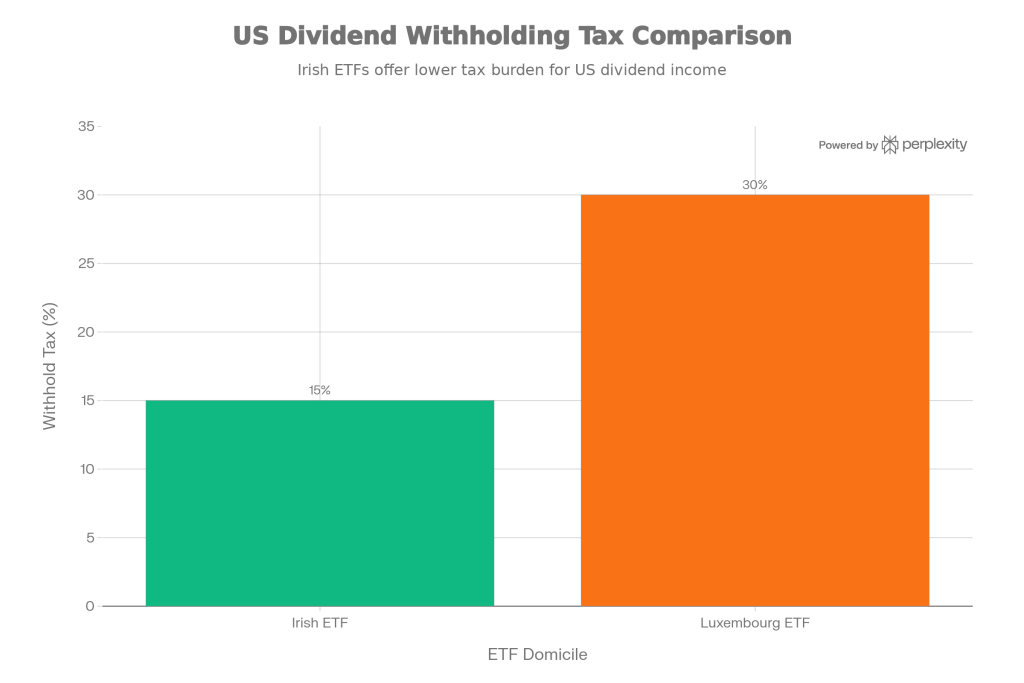
Chart 1: US Dividend Withholding Tax Comparison
Irish-Domiciled ETFs: The Tax Advantage Explained
Irish ETFs benefit from the US-Ireland double taxation treaty. This treaty cuts withholding tax on US dividend income from the standard 30% to just 15%. For investors with substantial exposure to US equities, the advantage compounds dramatically over time. Most global diversified portfolios, after all, lean heavily on US stocks.
Here’s exactly how the Irish tax advantage works:
- US Dividend Withholding: When a US company pays dividends, the fund faces a standard 30% withholding tax. The Ireland-US treaty reduces this to 15% for Irish-domiciled funds.
- No Distribution Withholding: Ireland does not impose any withholding tax on dividends distributed by the ETF to investors. You receive distributions “gross.”
- No Estate Tax: Ireland imposes no estate taxes, protecting your wealth transfer plans for future generations.
- No Subscription Tax: Unlike Luxembourg, Ireland charges no annual subscription tax on ETFs, whether active or passive.
The practical impact is substantial. Consider a diversified global portfolio. It carries 50% exposure to US equities and yields 3%. An Irish-domiciled ETF saves you 7.5 basis points annually compared to a Luxembourg alternative. That translates to €75 per €100,000 invested every single year. Moreover, it compounds steadily over decades.
Real-World Tax Efficiency: A Concrete Example
Let’s examine a realistic scenario. An investor purchases €100,000 in a dividend-focused global equity ETF yielding 3% annually. Over 10 years without reinvestment, that’s €30,000 in gross dividends.
| Scenario | Irish ETF (15% WHT) | Luxembourg ETF (30% WHT) |
|---|---|---|
| Gross Dividends (10 years) | €30,000 | €30,000 |
| US Withholding Tax (50% US exposure) | €2,250 | €4,500 |
| Net Dividends Received | €27,750 | €25,500 |
| Tax Advantage | €2,250 extra in your pocket | |
Both funds are available at every mainstream EU broker. The two I use and would point a European investor to first:
EU-regulated (CySEC) · 1,500+ UCITS ETFs · from €0 commission plansInteractive Brokers
Lowest FX & commission costs · every EU exchange · best for larger portfolios
Affiliate links — if you open an account I may earn a commission at no cost to you. It never changes which fund I recommend. Compare all EU brokers →
Key Insight: The Irish tax advantage isn’t theoretical. It’s real money staying in your account. Even modest dividend yields generate substantial extra returns through Irish-domiciled ETFs. Moreover, this advantage compounds when you reinvest dividends.
The compound dividend tool compounds DRIPs across a 30-year horizon.
Luxembourg-Domiciled ETFs: Competitive Position & Recent Changes
Luxembourg has historically served as Europe’s second-largest ETF hub. It hosts roughly 16% of the continent’s ETF assets. Despite facing structural disadvantages compared to Ireland, Luxembourg has made significant strides to improve its competitive position. The push has been especially strong for actively managed ETF products.
Not to be confused with: how Luxembourg taxes a resident investor, as opposed to a fund.
Methodology: the calculations in this guide apply our how we compute tax examples.
Luxembourg’s Traditional Disadvantages
The primary challenge for Luxembourg-domiciled ETFs centers on three factors:
Rates referenced here follow our country-by-country ETF tax table, checked against official sources.
- 30% US Dividend Withholding: Without the favorable US treaty, Luxembourg funds face the full standard withholding tax, doubling the tax burden on US dividend income.
- Subscription Tax (Recently Addressed): Until December 2024, Luxembourg charged an annual subscription tax of up to 0.05% on ETF assets. While passive ETFs were exempt, active ETFs bore this cost.
- Regulatory Complexity: Luxembourg’s regulatory structure, while sophisticated, was designed primarily for traditional mutual funds rather than ETF innovation.
Luxembourg’s Recent Competitive Improvements
Recognizing its weak position, Luxembourg has enacted significant reforms. These started in 2024 and continued into 2025. The changes include the following:
- Subscription Tax Exemption (December 2024): The Luxembourg Parliament abolished the subscription tax for both active and passive ETFs, eliminating a key competitive disadvantage.
- Active ETF Innovation: Luxembourg now allows semi-transparent active UCITS ETFs, providing greater flexibility for fund managers compared to Ireland’s traditional models.
- Fast-Track Regulatory Approval: The CSSF introduced an accelerated approval process to reduce time-to-market for new ETF launches.
- Strong Active Management Expertise: Luxembourg developed deep expertise in complex, actively managed strategies through its mutual fund heritage.
Important Update: Although Luxembourg has narrowed the competitive gap, the fundamental US withholding tax disadvantage (30% vs 15%) remains. Recent reforms make Luxembourg more competitive. However, Irish ETFs keep their structural tax advantage for US equity exposure.
Chart 2: 10-Year Portfolio Growth Comparison

Tax Efficiency Deep Dive: The Numbers Behind the Decision
Understanding the numerical impact of your domicile choice is essential. It drives an informed investment decision. Let’s examine comprehensive tax scenarios across different portfolio types.
This guide is part of our ETF tax guide for Europe.
For a deeper dive: Finland ETF tax 2026.
Scenario 1: Pure US Equity Portfolio
For investors heavily focused on US equity exposure (such as S&P 500 or MSCI USA trackers), the Irish advantage is maximum:
- Annual Dividend Yield: 2% on €100,000 = €2,000
- Irish ETF Tax: €2,000 × 15% = €300 withholding | Net: €1,700
- Luxembourg ETF Tax: €2,000 × 30% = €600 withholding | Net: €1,400
- Annual Advantage: €300 extra from Irish ETF
- 20-Year Advantage (without reinvestment): €6,000
- 20-Year Advantage (with reinvestment at 6% total return): €15,000+
Scenario 2: Global Diversified Portfolio (50% US / 50% Non-US)
For typical balanced global portfolios with mixed geographic exposure, the advantage diminishes. Yet it remains significant:
- US Dividend (50% allocation at 2% yield): €1,000 gross
- Non-US Dividend (50% allocation at 2% yield): €1,000 gross
- Irish ETF Tax Impact: (€1,000 × 15%) + (€1,000 × ~25%) = €400 withholding | Net: €1,600
- Luxembourg ETF Tax Impact: (€1,000 × 30%) + (€1,000 × ~25%) = €550 withholding | Net: €1,450
- Annual Advantage: €150 per €100,000 invested
Scenario 3: European-Focused Portfolio
Interestingly, for portfolios primarily invested in European equities, the domicile advantage effectively disappears:
- Both Irish and Luxembourg ETFs face similar withholding taxes on European dividend income
- Irish tax advantage applies only to US-source dividends
- Other factors (expense ratios, tracking error) become the primary differentiators
- Investor location becomes more important than fund domicile for European portfolios
Chart 3: European ETF Market Share by Domicile
Complete Cost of Ownership Analysis
Beyond withholding taxes, several other cost factors shape the true total cost of ownership. Let’s examine the complete picture:
| Cost Component | Irish ETF | Luxembourg ETF | Winner |
|---|---|---|---|
| US Dividend Withholding (10 years, €100k, 2.5% yield) | €3,750 | €7,500 | Ireland |
| Distribution Withholding in Fund Domicile | €0 | €0-€500 | Ireland |
| Annual Subscription Tax (10 years, €100k, 0.05%) | €0 | €0 (removed Dec 2024) | Tie |
| Typical Expense Ratio (annual, 10 years) | €5,000-€7,500 | €5,000-€7,500 | Comparable |
| Administrative Costs (embedded in NAV) | ~€1,500 | ~€1,500 | Comparable |
| Total 10-Year Cost | €10,250-€12,750 | €14,000-€17,000 | Ireland: €3,750+ savings |
Chart 4: Total Cost of Ownership Comparison (10 years)
How the US-Ireland Tax Treaty Mechanically Works Inside an ETF
The headline “15% vs 30% US withholding” comparison is correct. Still, it helps to understand exactly where in the chain the rate is applied. That way you can sanity-check your own broker statements. The withholding happens at the fund level, not at your broker. When Apple, Microsoft or any US-listed company pays a dividend to a US-domiciled ETF, no treaty applies. The fund is US-resident. By contrast, when the same dividend goes to an Irish-domiciled UCITS ETF, the US-Ireland treaty (Article 10) caps US source withholding at 15%. When the recipient is a Luxembourg UCITS, the treaty rate either does not apply or applies less favourably depending on share-class structure. As a result, the fund typically suffers the statutory 30% US withholding.
For European retail investors, the practical implication is clear. The 15-percentage-point gap is already baked into the ETF’s net asset value before the fund ever pays a distribution to your broker. You cannot reclaim it on your local tax return. Therefore, domicile choice compounds silently. That explains why so many justETF screens default to Irish-domiciled UCITS for US equity exposure. The EU UCITS framework overseen by ESMA sets the legal basis. Home-state supervision, in turn, falls to the Central Bank of Ireland in Ireland and the CSSF in Luxembourg.
German Investors and the “Steuerlicher Zufluss” Trap on Luxembourg-to-Ireland Mergers
The Amundi and BNP Paribas Luxembourg-to-Ireland ETF migrations of 2024-2025 highlighted an unusual quirk of German retail tax law. Under the Investmentsteuergesetz (InvStG), a cross-border fund merger between two different UCITS domiciles can be treated as a deemed disposal. Germans call this a steuerlicher Zufluss. The investor never placed a sell order, yet a tax event still fires. The result is a capital-gains-tax event on accumulated unrealised gains. Typically the tax authority applies the 25% Abgeltungsteuer plus Solidaritaetszuschlag (and, where applicable, church tax). Usually the broker withholds the lot at source.
The largest example was the Amundi MSCI World Luxembourg-domiciled ETF (former LU code). It merged into its Irish-domiciled counterpart, a roughly EUR 6.8 billion fund. German investors had held the Luxembourg share class for years. Suddenly, they saw a tax debit on their broker statements without having traded the position. The lesson is not that domicile migration is bad. Indeed, the long-term tax efficiency improvement is real. However, the timing of the migration matters enormously for German, French and certain other EU residents. For ongoing fund-flow and domicile-shift commentary, Morningstar UK and etf.com both publish periodic tracker updates. European investors can use these to spot upcoming mergers before they execute.
Which European Brokers Give You Access to Both Domiciles
Both Irish and Luxembourg UCITS ETFs are available across all major European retail brokers. The differentiator is breadth of listings on each side and whether your home exchange lists the share class with the lowest spread. Interactive Brokers and Freedom24 offer the widest cross-listed UCITS coverage on Xetra, Borsa Italiana, Euronext Amsterdam and the London Stock Exchange International Order Book. By contrast, Trade Republic and XTB focus their UCITS catalogue heavily on Irish-domiciled Xetra listings. This focus generally aligns with the cost-efficient default for US-equity-heavy portfolios. For a deeper side-by-side of these platforms, see our best European ETF brokers 2026 hub.
Are you choosing the same index across two domiciles? For example, MSCI World tracked by Amundi’s IE-domiciled vehicle vs the previous Luxembourg vehicle. The right move is usually a three-step check. First, check justETF for the largest, most-traded Irish-domiciled UCITS share class on Xetra. Second, confirm the ISIN, TER and accumulating/distributing flavour. Third, execute through your usual broker. Standard Bogleheads-style guidance from bogleheads.org applies here. Prefer broad, low-TER UCITS index funds in the right tax wrapper. Then let the compounding do the work over 20-30 years.
Practical Guide: Which ETF Domicile Should You Choose?
Choose Irish-Domiciled ETFs If:
- Your portfolio contains significant US equity exposure (40%+ allocation)
- You’re building a long-term dividend growth portfolio
- You prioritize after-tax returns and compound wealth growth
- You’re investing from outside Ireland but seeking EU regulation
- You want to minimize administrative complexity and fees
- You’re constructing a globally diversified portfolio
Luxembourg-Domiciled ETFs Might Be Preferable If:
- You’re specifically seeking actively managed strategies with lower transparency requirements
- Your portfolio is concentrated in European or non-US equities
- You require specialized expertise in complex fund structures
- You’re a German investor (note the tax implications of recent mergers)
- You value regulatory flexibility for innovative investment strategies
Special Consideration: ETF Mergers & Taxable Events
Recent ETF migrations from Luxembourg to Ireland have created important tax implications for certain investors. In 2024-2025, major asset managers including Amundi and BNP Paribas merged Luxembourg-domiciled ETFs into Irish-domiciled counterparts. The goal was to capture the US tax advantage.
However, German investors faced unexpected tax consequences from these mergers. Under German tax law, the relocation counted as a “taxable event.” Essentially, the rules treated it as a forced sale and repurchase. This triggered capital gains tax even though the investor made no deliberate transaction. The change affected significant portfolios. Notably, the €6.8 billion Amundi MSCI World Luxembourg ETF merger served as a prominent example.
Key Takeaway for Investors: Are you domiciled in Germany, France, or another country with strict cross-border fund transfer regulations? Verify the tax implications before investing. What appears to be a beneficial fund reorganization could trigger unexpected tax bills.
Making Your Decision: A Complete Action Plan
Follow this systematic approach to optimize your ETF domicile choice:
- Assess Your Allocation: Calculate your portfolio’s geographic exposure. What percentage is US equity versus other assets?
- Calculate Your Tax Impact: Use the scenarios above to estimate your annual withholding tax burden under each domicile.
- Check Your Tax Residency: Verify whether your country of tax residency has special treaty arrangements affecting ETF taxation.
- Project 20-Year Returns: Multiply annual tax savings by 20 and add compound growth assumptions. The advantage becomes substantial over time.
- Review Specific Funds: Once you’ve chosen a preferred domicile, compare individual ETF options on expense ratios, tracking error, and liquidity.
- Monitor Regulatory Changes: Tax laws evolve. Stay informed about changes affecting ETF taxation in your jurisdiction and fund domiciles.
Frequently Asked Questions: Irish vs Luxembourg ETFs
Q: Are Luxembourg ETFs being phased out in favor of Irish ETFs?
A: No. While Irish ETFs dominate the market, Luxembourg remains competitive. This is especially true for complex actively managed strategies. Recent regulatory reforms strengthen Luxembourg’s position.
Q: Will Luxembourg’s subscription tax removal close the gap with Ireland?
A: Partially. It eliminates Luxembourg’s cost disadvantage. However, the 15% US withholding tax advantage of Irish ETFs remains intact. The fundamental US treaty advantage cannot be replicated.
Q: Should I switch my existing Luxembourg ETF holdings to Irish equivalents?
A: Evaluate carefully based on your tax residency. For most EU investors without special tax status, Irish ETFs are superior for US-heavy portfolios. However, switching may trigger capital gains tax.
Q: How does ETF domicile affect UK-based investors?
A: Post-Brexit, UK investors should carefully verify whether Irish-domiciled ETFs maintain their tax treaty advantages. Most major investment platforms offer both Irish and UK-listed alternatives.
Q: Do accumulating ETFs have different tax treatment than distributing ETFs by domicile?
A: The domicile advantage (15% vs 30% US withholding) applies equally to both accumulating and distributing ETFs. However, accumulating ETFs may offer tax efficiency advantages in certain jurisdictions regardless of domicile.
Frequently Asked Questions
Why does Ireland have a 15% US withholding tax while Luxembourg has 30%?
Ireland negotiated a US double-tax treaty (Article 10). It explicitly reduces US-source dividend withholding for Irish-resident UCITS funds to 15%. By contrast, Luxembourg’s US treaty either does not extend the same reduced rate to its UCITS share classes or applies it less favourably depending on structure. Therefore, Luxembourg-domiciled funds typically suffer the full statutory 30% US withholding at the fund level. The difference is locked in at the ETF NAV. Retail investors cannot reclaim it on their personal tax return.
Is the Irish 15% US withholding advantage already priced into the ETF’s NAV?
Yes. The 15-percentage-point withholding gap is applied at the fund level before the ETF pays any distribution or accumulates dividends internally. Therefore, it shows up silently as a higher NAV for Irish-domiciled UCITS versus an otherwise identical Luxembourg vehicle. By contrast, two ETFs tracking the same MSCI World or S&P 500 index can show meaningfully different total returns over 10-20 years. Domicile alone drives this gap.
Should I switch a Luxembourg ETF to an Irish equivalent if I am a German investor?
Be careful. Under the German Investmentsteuergesetz, fund mergers across UCITS domiciles can trigger a deemed disposal (steuerlicher Zufluss). The trigger generates an immediate capital-gains-tax event on unrealised gains. Notably, this happens even though you did not place a sell order. The 2024-2025 Amundi and BNP Paribas Luxembourg-to-Ireland migrations created exactly this surprise for many German retail investors. Check your specific tax position before initiating a voluntary switch. Additionally, watch for upcoming mergers on issuer announcement pages.
Does the Irish domicile advantage apply to European or emerging-market dividends?
No. The 15% vs 30% withholding gap is specific to US-source dividends. It rests on the US-Ireland tax treaty. European, UK and emerging-market dividend withholding rates flow from the host country’s own treaties with the fund domicile. On those flows, Irish and Luxembourg UCITS face broadly comparable rates. Therefore, for European-only or EM-only sleeves, expense ratio, tracking quality and liquidity usually dominate the domicile choice.
Does it matter whether the ETF is accumulating or distributing for domicile tax efficiency?
The domicile advantage (15% vs 30% US withholding) applies equally at the fund level. The accumulating or distributing nature of the UCITS does not change it – the treaty rate is the same. What changes between accumulating and distributing wrappers is your personal tax treatment in your country of residence. For example, German “Vorabpauschale” or Irish “8-year deemed disposal” rules apply independently of fund domicile.
What share of European ETF assets is currently in Irish-domiciled UCITS?
Public industry trackers consistently put Ireland’s share of European ETF assets at roughly 84%. Luxembourg sits at about 16%, with a small residual in Germany, France and other domiciles. Net flows have continued to favour Ireland. Moreover, the wave of 2024-2025 Luxembourg-to-Ireland fund migrations by Amundi, BNP Paribas and others is widening rather than narrowing that gap. This trend persists despite Luxembourg’s December 2024 subscription-tax abolition.
Are Luxembourg ETFs ever the better choice for a European investor?
For Bogleheads-style core allocations dominated by US equities, Irish-domiciled UCITS remain the structurally more tax-efficient default. However, Luxembourg can still make sense for certain actively managed UCITS strategies. It also fits semi-transparent active ETFs that Luxembourg’s framework allows. Additionally, it works where a specific Luxembourg-domiciled vehicle has materially lower TER or better tracking than the Irish alternative on the same index.
Where can I check the domicile of a specific UCITS ETF before I buy?
The ISIN prefix is the fastest signal. ISINs starting with “IE” indicate Ireland-domiciled UCITS. ISINs starting with “LU” indicate Luxembourg-domiciled UCITS. You can cross-check this on the issuer factsheet (for example on Vanguard UK or iShares UK), on justETF, or in the KID (Key Information Document) that the regulated fund must publish under PRIIPs rules.
The Bottom Line: Making Tax Efficiency Work for You
The Irish vs Luxembourg ETF choice is fundamentally about maximizing your after-tax returns. The tax difference might seem small. Indeed, it amounts to just 15 percentage points on US withholding. However, it compounds into substantial wealth over decades of investing.
For the typical investor with meaningful US equity exposure, Irish-domiciled ETFs represent the more tax-efficient choice. The mathematical advantage is clear. Specifically, 15 basis points of annual performance improvement compounds over 20+ years. This adds tens of thousands of euros to your portfolio.
However, tax efficiency should never be your only consideration. Evaluate each ETF based on the following:
- Expense Ratio: A 0.3% difference in costs dwarfs domicile advantages
- Tracking Error: Poor tracking quality wastes tax savings
- Liquidity: Smaller, less-liquid ETFs may have wider spreads
- Diversification Quality: The index being tracked matters more than the wrapper
- Your Tax Situation: Your personal tax residency and circumstances override general rules
The best ETF is one that combines low costs, efficient tracking, and appropriate tax treatment for your specific situation. Use the domicile comparison as one important factor in your broader fund selection process. Do not lean on it as the sole decision driver.
Therefore, by understanding these distinctions and making informed choices aligned with your portfolio structure and circumstances, you can optimize your investment returns. Moreover, you build greater long-term wealth through tax-efficient investing.
Put a number on the domicile question: the gap between an Irish and a Luxembourg fund on US dividends is worth roughly fifteen basis points a year — our free ETF withholding tax calculator models that leakage on your own allocation.
Sources and further reading
- justETF — European UCITS ETF screener
- Morningstar UK ETF rankings
- ESMA — European Securities and Markets Authority
- Bogleheads wiki — EU investing
- ETF.com industry data
European UCITS/ETF investor with 11+ years building a global dividend and index portfolio, and founder of Financial Expert Class. I write every guide here from first-hand experience investing across EU brokers and tax regimes — not theory. More about me →