
To get a plan running in minutes, see my Trade Republic setup guide.
I compare fees, plans and platforms in which app broker fits you.
The practical walkthrough is here: the Scalable Capital savings-plan walkthrough.
Just received your first payslip? Follow the first-salary ETF action plan.
For the side-by-side scenario test, see DCA vs buying the dip.
If you are torn between the two German apps, see which German neobroker fits you.
ETF Dollar-Cost Averaging: The European Investor’s Guide to Regular Investment Timing
ETF dollar-cost averaging has become the cornerstone strategy for millions of European investors. Moreover, it suits anyone seeking steady wealth accumulation. This systematic approach removes emotional decisions from investing. In addition, it capitalises on market volatility. For European investors navigating UCITS rules and broker options, smart investment timing frequencies matter. Crucially, those choices can shape long-term returns.
One caveat every DCA investor should know: your personal return will differ from the fund’s published figure. The real return (XIRR) calculator computes what your euros actually earned.
New to the whole process? The free Starter Kit walks you from fund choice to your first automated purchase.
For a single view of performance and allocation across accounts, I rely on the consolidated tracker I rely on.
Want the whole path in one place? — The Masterclass takes you from zero to a running, tax-aware portfolio — 55 text lessons, one weekend to read.
For the volatility and max-drawdown numbers head-to-head, use the max-drawdown analyzer.
The European ETF market has exploded in recent years. By 2024, it reached a record €2.18 trillion in assets under management. This growth opens fresh opportunities for retail investors. Therefore, building diversified portfolios through regular, disciplined investing is easier than ever. Dollar-cost averaging into ETFs offers a practical path for European and global market exposure. Notably, it sidesteps the complexity of market timing. Moreover, understanding the ETF fee structure for Europeans matters for maximising returns. Lower fees can lift overall performance over time. In practice, investors should compare different ETFs to find ones that fit their goals and cost preferences. As the market evolves, staying informed about fees will be crucial. Additionally, effective ETF asset allocation strategies can sharpen outcomes by spreading assets across sectors and regions. This tailored approach balances risk and reward against unique financial goals. Consequently, flexible reassessment of allocation remains vital for adapting to change. For newcomers, a comprehensive beginner’s guide to ETFs provides valuable insights for navigating this expanding market. By understanding the different ETF types — equity, bond, and commodity — investors can match choices to their risk appetite. Additionally, online resources and educational platforms empower retail investors. Therefore, financial literacy and confidence both grow. As investors explore opportunities, equity ETFs for European investors offer an attractive option for capturing regional growth. These funds provide exposure to major European markets and diversify across sectors. By selecting equity ETFs aligned with their goals, investors position themselves to benefit from Europe’s ongoing recovery.
Understanding Dollar-Cost Averaging Fundamentals
Dollar-cost averaging (DCA) involves investing fixed amounts at regular intervals. Importantly, this happens regardless of market conditions. This strategy automatically buys more shares when prices are low. By contrast, it buys fewer when prices are high. Consequently, it can lower your average cost per share over time.
Browse the full series in our FIRE and allocation hub.
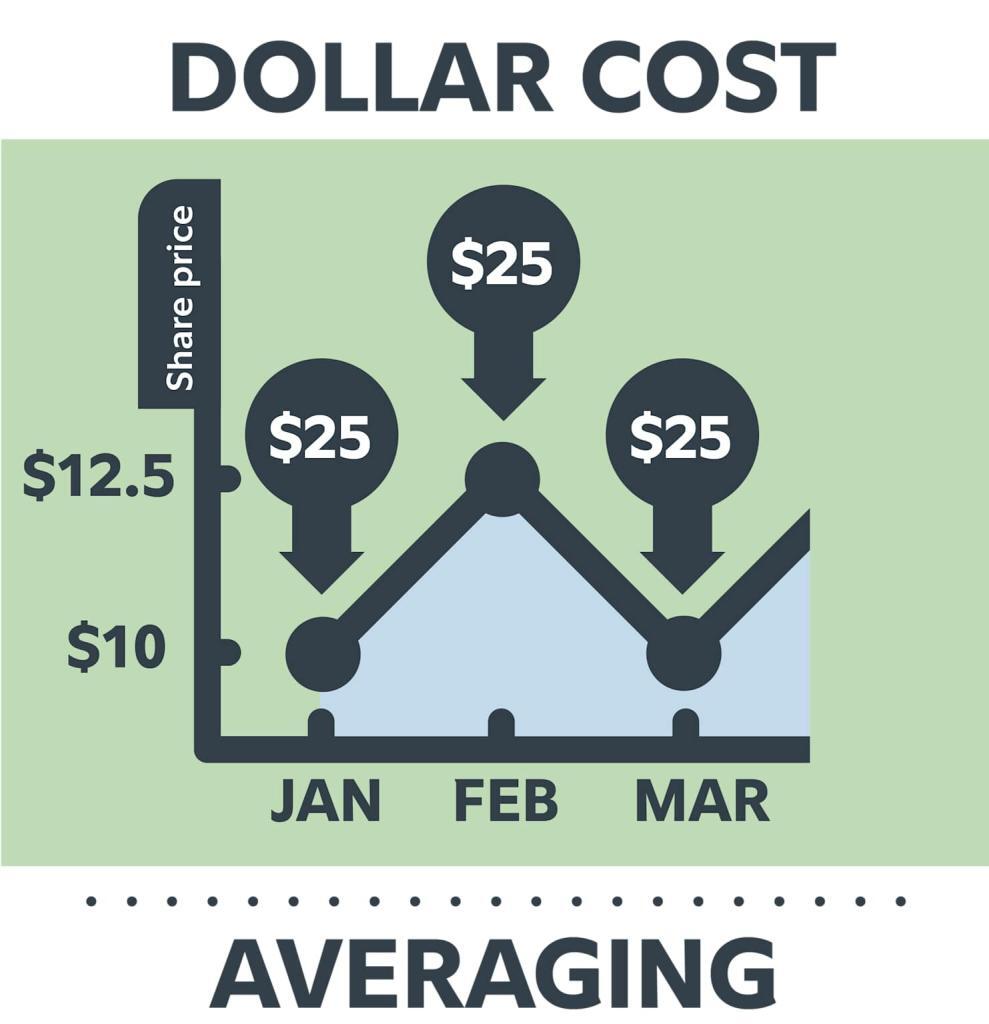
Dollar-cost averaging illustration showing regular $25 investments over three months despite fluctuating share prices – fidelity
The mathematical principle behind DCA is elegantly simple. When you invest €500 monthly into a European equity ETF, market volatility works in your favour. During downturns, your fixed amount buys more shares. However, when markets rise, you acquire fewer shares. Crucially, you still benefit from the rising value of earlier holdings.
Related reading: how to invest EUR 500 a month in Europe.
Key advantages include:
- Reduced impact of market volatility on portfolio performance
- Elimination of timing pressure and emotional investing decisions
- Automatic enforcement of disciplined investment habits
- Lower average purchase prices compared to lump-sum investing during volatile periods
Research from Vanguard shows lump-sum investing beats DCA roughly 67% of the time. However, DCA delivers superior risk-adjusted returns when volatility runs high.
See also: why your savings rate beats your return.
The Explosive Growth of European ETF Markets
European ETF markets have expanded at an unprecedented pace. Therefore, conditions now favour dollar-cost averaging strategies. The market offers over 3,127 different ETF products across 29 exchanges in 24 countries.

European ETF Market Growth: Assets Under Management and Net Inflows (2019-2024)
This remarkable growth reflects rising investor sophistication. Moreover, demand for low-cost, transparent vehicles keeps climbing. Net inflows reached a record €247 billion in 2024. Notably, that figure marks a 70% jump from the prior year. The diversity of available ETFs means European investors can reach almost any segment, geography, or theme through regular investing.
Popular ETF categories for European DCA strategies include:
- Broad European equity ETFs tracking STOXX Europe 600 or MSCI Europe indices
- Global equity ETFs providing worldwide diversification
- US equity ETFs offering exposure to American growth companies
- Emerging markets ETFs for higher-growth potential allocations
- Bond ETFs for income and portfolio stability
The UCITS framework ensures all European-domiciled ETFs meet strict investor protection standards. These include asset segregation, diversification rules, and counterparty risk limits.
Optimizing Investment Timing Frequencies
The frequency of your DCA investments can shape both returns and transaction costs. European investors typically pick between weekly, monthly, or quarterly schedules. In practice, cash flow patterns and broker fee structures drive the choice.
Monthly Dollar-Cost Averaging
Monthly investing sits in the sweet spot for most European investors. This frequency aligns with salary payments and trims transaction costs. Monthly DCA strategies capture enough market volatility to benefit from price averaging. Importantly, they avoid excessive trading friction.
Analysis of European ETF performance shows €500 monthly investments can build substantial wealth. Moreover, the consistency of monthly investing fits automatic plans offered by most European brokers. By drawing on the findings of an ETF performance historical return analysis, investors can better judge potential growth paths. This data offers valuable insights into market trends. Therefore, decisions about future contributions become more informed. Ultimately, disciplined investing plus historical metrics positions investors for long-term success. Additionally, an ETF flow analysis for Europe can reveal investor sentiment and preferences. Consequently, individuals can align their portfolios with prevailing market dynamics. By watching inflows and outflows within the ETF landscape, investors can adjust strategies to seize emerging trends. In short, grasping both historical performance and current flows sharpens decisions and lifts long-term outcomes.
Quarterly Investment Approaches
Quarterly investing suits investors with irregular income or those seeking even lower transaction costs. Although this approach may miss some short-term volatility benefits, it cuts admin overhead. Moreover, it works well for larger investment amounts.
Quarterly DCA advantages:
- Lower overall transaction costs
- Suitable for bonus-based compensation patterns
- Reduced portfolio monitoring requirements
- Higher individual investment amounts may access better pricing
Weekly Investment Strategies
Weekly investing maximises the dollar-cost averaging effect. However, it may not pay off for smaller amounts because of transaction fees. This frequency works best for high-income investors. Alternatively, those using commission-free brokers also benefit.
Research suggests weekly investing edges monthly strategies only slightly. By contrast, complexity rises sharply. Therefore, most European investors find weekly frequencies unnecessarily burdensome.
Performance Analysis: Monthly vs Quarterly Strategies
Real-world performance data offers interesting insights about investment timing frequencies. Our analysis of European ETF investing over 24 months shows how different DCA frequencies perform under varying conditions. By examining the link between investment timing and market swings, we uncover how volatility shapes DCA effectiveness. Furthermore, understanding ‘etf liquidity explained‘ sharpens our ability to assess which frequency cuts risk and lifts returns. In practice, this approach offers valuable insight for investors looking to optimize their ETF investments amid a shifting financial landscape.
Comparison of Monthly vs Quarterly ETF Dollar-Cost Averaging Performance Over 24 Months
The comparison reveals remarkably similar outcomes. Monthly €500 investments matched quarterly €1,500 investments closely. Both strategies achieved nearly identical final portfolio values. Specifically, monthly DCA produced €11,293 versus €11,300 for quarterly DCA on €12,000 invested.
Key findings:
- Average cost per share: Monthly DCA achieved €55.14, quarterly €54.80
- Total shares acquired: Monthly strategy purchased 217.62 shares, quarterly 218.98 shares
- Performance similarity: Less than 0.1% difference in final returns
- Volatility capture: Both strategies effectively captured market fluctuations
This analysis confirms timing frequency has minimal impact on long-term returns. By contrast, consistent investment discipline does most of the work.
Tax Considerations for European ETF Investors
European ETF taxation varies sharply across member states. Therefore, DCA strategies need careful local consideration. Understanding your local tax rules ensures the best after-tax returns from regular investing.
Key tax considerations include:
Accumulating vs Distributing ETFs
Accumulating ETFs reinvest dividends automatically. Consequently, they bring tax advantages in many European jurisdictions. These funds show superior compounding for long-term DCA strategies. Notably, this matters most in countries with high dividend tax rates. Additionally, couples managing investments can lean on spousal contributions for tax efficiency to optimise their joint tax burden. By pairing these strategies with accumulating ETFs, investors can boost asset growth potential. This approach leverages compound growth. Moreover, it softens the hit from high dividend taxes across jurisdictions. Investors may also consider adding dividendfocused exchangetraded funds to their portfolios. These investments often provide steady income while benefiting from reinvested dividends. Furthermore, selecting funds focused on high-quality dividend payers strengthens portfolio resilience during market swings. In short, this holistic approach lifts both capital appreciation and income — leading to a more robust financial future.
UCITS ETF Tax Efficiency
UCITS-compliant ETFs offer favourable withholding tax treatment on US equities for European investors. In practice, Irish and Luxembourg-domiciled funds typically deliver the best tax efficiency. By contrast, direct stock ownership tends to lag.
Capital Gains Treatment
Most European countries set capital gains tax rates below income tax rates. Therefore, long-term ETF holdings through DCA often qualify for reduced rates or exemptions.
Country-specific considerations:
- Germany: Accumulating ETFs face deemed distribution taxation
- Ireland: ETF investors face 38% exit tax and deemed disposal rules
- Belgium: 10% capital gains tax on ETF gains above a €10,000 annual exemption (since 1 January 2026)
- Netherlands: Wealth tax implications for larger portfolios
Selecting the Right European Broker
Choosing the right broker can make or break DCA strategy success. European investors can pick from many regulated platforms. Notably, these offer different fee structures and ETF selections.
Top European Brokers for ETF DCA
| Broker | ETF Commission | Available ETFs | Key Benefits |
|---|---|---|---|
| Interactive Brokers | €0.05-1.25 | 13,000+ | Lowest costs, global access |
| Trading 212 | €0 | 150+ | Commission-free, simple interface |
| DEGIRO | €1 + €2.50/year | 200+ | Wide ETF selection, established platform |
| XTB | €0* | 100+ | No commission up to €100K monthly |
| Scalable Capital | €0.99 | 800+ | German regulation, savings plans |
*Conditions apply for zero-commission trading
Interactive Brokers stands out for serious DCA investors thanks to its broad ETF selection and minimal fees. The platform’s tiered pricing rewards regular investors with costs as low as €0.05 per transaction. Additionally, Interactive Brokers offers advanced tools and analytics. Therefore, investors can refine their dollar-cost averaging strategies. By contrast, lighter platforms can fall short on these features. For these reasons, many investors turn to interactive brokers for european etf investors to grow portfolios while controlling costs.
Selection criteria for DCA brokers:
- Commission structure alignment with investment frequency
- Available ETF selection covering desired markets and strategies
- Regulatory protection through EU member state supervision
- Automated investment features for consistent DCA execution
- Tax reporting capabilities for local compliance requirements
Implementing Your ETF DCA Strategy
Successful implementation needs systematic planning. Moreover, consistent execution matters most. European investors gain from structured approaches that match personal goals and cash flow.
Step-by-Step Implementation
1. Define Investment Objectives
Establish clear goals for your DCA strategy. Importantly, include target allocation across asset classes and regions. European investors typically allocate 60-80% to equity ETFs and 20-40% to bond ETFs.
2. Select Core ETF Holdings
Choose broadly diversified, low-cost ETFs as your foundation. Popular picks include FTSE Developed Europe, MSCI World, and MSCI Emerging Markets funds. Together, they deliver comprehensive global exposure.
3. Determine Investment Frequency
Align investment timing with income patterns and broker fees. Monthly investing suits most European investors. By contrast, quarterly may work better for those with variable income. For investors who choose a monthly approach, consistent contributions tap the compound interest growth formula. Consequently, substantial returns can follow over time. By contrast, investors with variable income may find a quarterly cadence helps manage cash flow. Importantly, they still seize market opportunities. Ultimately, matching frequency to personal circumstances lifts portfolio performance. A dividend investment calculator tool can further help investors gauge potential income from their choices. Therefore, picking an appropriate frequency becomes easier. By entering different amounts and expected yields, individuals can visualise how various schedules affect returns. In practice, this approach aligns cash flow with income potential over time.
4. Establish Automatic Transfers
Configure automated bank transfers to your brokerage account. Consequently, DCA purchases stay funded without lapses. Crucially, this removes the temptation to skip investments during downturns.
5. Monitor and Rebalance
Review portfolio allocation quarterly. In addition, rebalance when asset weights drift significantly from targets. Notably, DCA itself delivers some rebalancing benefits through steady contributions.
Advanced DCA Strategies
Value Averaging: Instead of investing fixed amounts, adjust investment size based on performance targets. This strategy can boost returns. However, it demands more active management.
Enhanced DCA: Increase investment amounts during downturns when ETF prices are depressed. By contrast, this approach requires cash reserves and timing discipline.
Multi-Asset DCA: Run separate DCA streams for different asset classes. Therefore, you keep independent allocation control while preserving DCA benefits across the portfolio.
Market Cycles and DCA Performance
Understanding market cycles helps European investors keep DCA discipline during tough periods. Historical analysis reveals how regular investing performs across different environments.
Bull markets create challenges for DCA investors. Specifically, continuously rising prices push up average purchase costs. However, wealth accumulation from early purchases usually outweighs higher recent prices. European equity ETFs have delivered positive returns in roughly 75% of rolling 12-month periods since 2000.
Bear markets provide DCA’s greatest edge. Falling prices let fixed amounts buy more shares. For example, the 2008 financial crisis and the 2020 pandemic crash showed how regular investors benefit from sustained downturns through bigger share purchases.
DCA performance across market conditions:
- Bull markets: Wealth accumulation from early investments compensates for higher average costs
- Bear markets: Increased share accumulation drives superior long-term returns
- Sideways markets: DCA provides minimal advantage over lump-sum investing
- Volatile markets: Maximum DCA benefit through price averaging effects
Real-World Success Stories
European investors have built substantial wealth through disciplined DCA strategies. For example, a German investor starting monthly €400 investments in a European equity ETF in 2010 would have accumulated over €85,000 by 2024. Notably, this held despite several market corrections during the period.
Similarly, Dutch investors using accumulating UCITS ETFs have enjoyed compound growth while sidestepping annual dividend taxation. Therefore, the combination of DCA timing and tax-efficient fund structures builds powerful wealth-building momentum over decades.
Success factors identified:
- Consistency: Never missing scheduled investments regardless of market conditions
- Patience: Maintaining strategies for decades rather than years
- Tax efficiency: Selecting appropriate fund structures for local tax conditions
- Cost management: Minimizing fees through appropriate broker selection
- Diversification: Spreading investments across multiple asset classes and regions
Common Pitfalls and Solutions
European DCA investors often run into specific challenges. Crucially, these can derail long-term success. Understanding these pitfalls enables proactive prevention.
Emotional Interference: Market volatility triggers emotional responses that disrupt DCA discipline. Solution: Automate investments completely. Therefore, emotional decision-making opportunities vanish.
Inadequate Diversification: Concentrating DCA investments in home country ETFs limits global exposure. Solution: Allocate at least 50% to international equity ETFs for broader diversification.
Fee Neglect: High transaction costs erode DCA benefits, particularly for smaller amounts. Solution: Pick brokers offering commission-free or low-cost ETF trading aligned with your investment frequency.
Tax Inefficiency: Ignoring local tax rules cuts after-tax returns significantly. Solution: Consult tax professionals. Moreover, select ETF structures optimised for your jurisdiction.
Future Outlook for European ETF Investing
The European ETF market keeps evolving rapidly. Consequently, fresh opportunities open for DCA investors. Active ETFs have grown 385% over the past five years. Meanwhile, ESG-focused funds attract rising investor attention. The shift toward sustainable investing has fuelled demand for ESG strategies. Therefore, they now sit at the centre of many portfolios. Additionally, the emergence of bond ETFs for European investors offers a compelling option for those seeking stability and income in turbulent markets. As more asset classes become accessible, investors can diversify holdings and tailor strategies to personal goals. Furthermore, the growth of sector-specific ETFs, such as healthcare ETFs for European investors, opens additional avenues for diversification and targeted strategies. Consequently, investors can ride the momentum of certain industries. Moreover, portfolios align with forward-looking trends. As the market broadens, staying informed about these developments remains crucial for strategic decisions. Moreover, understanding how ETFs function in trading matters for investors aiming to harness market fluctuations. Because these vehicles offer liquidity and transparency, they appeal to both novice and experienced investors. In practice, embracing education around ETF trading mechanics empowers smarter decisions aligned with financial goals. Additionally, as the ETF landscape expands, grasping the intricacies of the ETF creation process explained sharpens the ability to navigate markets. By understanding how ETFs are built, investors can better judge underlying assets and risks. Therefore, this knowledge supports informed choices. Moreover, it builds confidence in portfolio management amid ongoing change. Investors should also weigh the benefits of investing in sector and industry ETFs. Notably, these can offer targeted exposure to specific markets and lift portfolio performance. By leveraging the unique traits of these funds, investors can align their holdings with emerging trends and economic shifts. As ETF variety expands, knowing how to integrate sector and industry ETFs into a broader strategy will be essential for maximising returns.
Technological advances enable more sophisticated DCA implementations. For example, fractional share investing and AI-driven portfolio optimisation now exist at scale. Moreover, European investors benefit from ongoing fee compression as ETF providers compete harder.
Emerging trends affecting DCA strategies:
- Fractional investing enabling precise allocation regardless of share prices
- Sustainable investing integration through ESG-focused ETF selections
- Active ETF adoption providing alpha opportunities within DCA frameworks
- Digital broker innovations simplifying automated investment processes
- Regulatory harmonization across EU member states reducing complexity
In short, the future favours disciplined European investors who embrace systematic DCA strategies. Crucially, they must also adapt to evolving market opportunities and regulatory changes.
Conclusion
ETF dollar-cost averaging stands out as the most practical wealth-building strategy for European investors. Specifically, it suits anyone seeking long-term financial security. The combination of market volatility mitigation, emotional discipline, and compound growth drives powerful wealth accumulation over decades. By steadily contributing to an ETF buy and hold strategy, investors can ride out market dips without the stress of perfect timing. Moreover, this method builds a disciplined saving habit. Consequently, compound interest gains time to work. As a result, even modest, regular contributions can build significant wealth and strengthen long-term security.
European investors enjoy unique advantages thanks to UCITS regulations. Notably, those rules safeguard investors while opening global markets at minimal cost. The explosive growth in available ETFs delivers unprecedented diversification across asset classes, geographies, and themes. Moreover, technology and online platforms have boosted accessibility. Therefore, investors can make informed decisions swiftly. Additionally, freedom24 benefits for ETF investors, such as commission-free trading and a wide choice of funds, let them optimise portfolios. As a result, European investors stand well-placed to ride market trends while managing risk. Furthermore, as investors seek platforms aligned with their strategies, many are choosing brokers that offer real advantages. This is why xtb is preferred by investors, as it pairs robust trading tools with extensive market analysis. By leveraging such platforms, European investors can lift their trading experience. Consequently, strategic decisions align tightly with financial goals.
Success requires:
- Consistent execution regardless of market conditions
- Appropriate frequency aligned with personal cash flows and costs
- Tax-efficient implementation through proper fund selection
- Broker optimization minimizing fees while maximizing ETF access
- Long-term perspective measuring success over decades, not quarters
The evidence overwhelmingly supports dollar-cost averaging as the superior strategy. Specifically, it beats market timing or sporadic investing for wealth accumulation. European investors who implement disciplined DCA strategies today position themselves for substantial wealth creation over their investing careers.
Start your ETF dollar-cost averaging journey with small, consistent amounts. Compound growth plus systematic investing discipline will transform your financial future through the simple act of regular, patient investment execution. As confidence grows, you can explore various ETF investment strategies explained across many online resources. By diversifying across sectors and asset classes, you boost growth potential while softening market swings. In short, the key is consistency and a long-term perspective. Therefore, your investments gain time to grow and work for you.
Sources and further reading
- justETF — European UCITS ETF screener
- Morningstar UK ETF rankings
- ESMA — European Securities and Markets Authority
- Bogleheads wiki — EU investing
- ETF.com industry data
Putting it on autopilot: read automating with a savings plan.
European UCITS/ETF investor with 11+ years building a global dividend and index portfolio, and founder of Financial Expert Class. I write every guide here from first-hand experience investing across EU brokers and tax regimes — not theory. More about me →